
 Posted by
 An Independent Approach
Climate change is caused by a buildup of gases in the atmosphere, particularly carbon dioxide. As these gases increase due to industrial processes and modern living practices, they are unable to be absorbed in to the atmosphere. This results in an added intensity within the greenhouse effect and a subsequent increase in temperatures. Robbins et al. says, “If a buildup of gases increases the level of heat-trapping over time, it can be reasonably expected that global temperatures will rise” (146-7). It is expected that increasingly warmer temperatures will cause the global temperature to rise between 1 and 6˚F in the next century. The results of this will be changes in climate patterns, such as flooding in low lying places due to increased rainfall, and conversely, drought in others from too much heat. Indirect effects such as melting icecaps in the polar regions will cause overall sea levels to rise causing flooding, while areas used to receiving snow will receive less in winter.
The effects of climate change are serious problems that need to be resolved. But how? Institutional approaches require international cooperation, through compromise and rule making. This appears to be problematic and difficult to achieve as the latest developments affecting the Paris Climate Agreement (2016) suggest. Market approaches include making green consumption efficient and transferring rights to the atmosphere; these assumptions are fraught with problems if companies greenwash their products and industrialized countries begin passing on their carbon emissions to poorer countries. Political economists will look at the problem as one of capital accumulation, where both labor and environmental costs must be lowered to reduce the production of surplus value. The result of this would make it uneconomical to change the market. One solution is for countries, states and cities to implement their own specific climate change agendas.

Figure 1. Map of O’ahu (Source: www.mappery.com, 2019)
The uneven development of the global economy results in countries not producing carbon emissions experiencing the worst effects. Robbins et al. state, “Small island nations throughout the South Pacific, most notably face total inundation from sea-level rise associated with melting ice-caps.” (158) Among many areas of the world that would be severely impacted by such an environmental change is the US state of Hawai’i, and, the island of O’ahu, provides an excellent example of this.
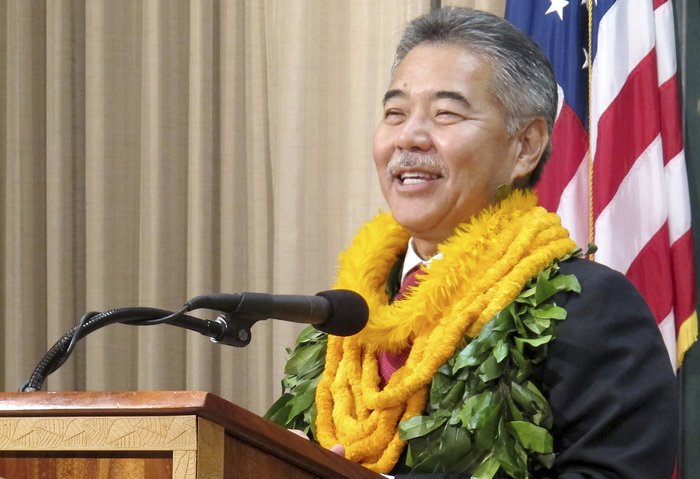
Figure 2. Hawai’i Governor David Ige (Source: www.npr.org, 2017)
Hawai’i’s Response
Robbins et al. make the point that “other kinds of more ad hoc, local and regional efforts…may be more important than anyone has previously predicted” (152) when referring to setting agendas to manage the effects of climate change. To this end, the State of Hawai’i has set out its own agenda to deal with its specific set of climate circumstances. Along with twelve other US states, Hawai’i is continuing to adopt the goals of the Paris Climate Agreement, despite the United States decision to pull out in 2017. For Hawai’i, “Reducing greenhouse emissions is now the law…to keep pace with environmental commitments made as part of the Paris Accord” Hawai’i Public Radio’s Bill Dorman said (npr.org). It was signed in to law by Governor David Ige in June 2017.

Figure 3. Potential impact of climate change for the State of Hawai’i. (Source: www.climate.hawaii.gov, 2019)
To facilitate the new law, the Hawai’i Climate Change Mitigation and Adaptation Commission was established. One of the most important aspects of climate change for Hawai’i and for which O’ahu provides a good example, is the impact of sea-level rise. The Commission published its Hawai’i Sea Level Rise Vulnerability and Adaptation Report in 2017. Figure 3 shows the potential state-wide impact of flooding by a 3.2-foot increase in sea-level on Hawai’i”s coastline, the economy and infrastructure . Note how severely O’ahu is affected.
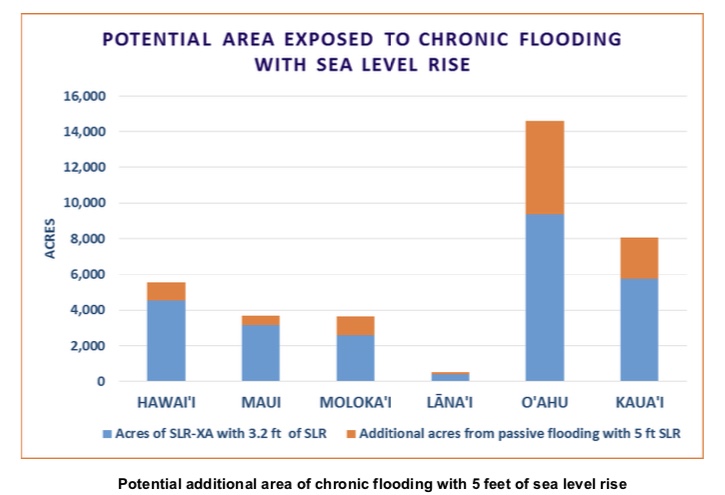
Figure 4. The number of acres of potential flooding due to a five-foot sea-level rise. (Source: www.climate.hawaii.gov, 2019)
The above graph reiterates the severity for the State of Hawai’i and specifically O’ahu, showing the difference between the likely 3.2-foot sea-level rise and a potentially catastrophic 5-foot rise. The Hawai’ian islands are volcanic in origin and offer some areas of higher ground, but even so, the potential flooding will be devastating. Lower lying Pacific and Indian Ocean islands will be completely submerged.

Figures 5 & 6. Waikiki Beach as it is today. (Source: Carol Munro, 2018)

O’ahu’s Response
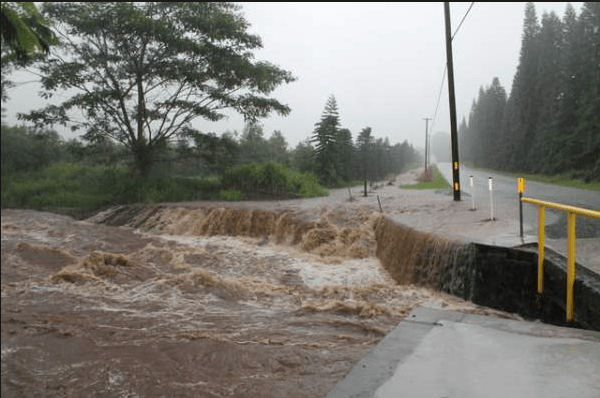
O’ahu is a small island very susceptible to the effects of climate change, whether it involves rain or higher or lower than average temperatures. Water is a precious commodity on the island, with little fresh water for an increasing population. For Hawai’i overall, 2015 and 2016 were the hottest years on record and by the end of the 21st century, temperatures are forecast to increase by 5.2 to 6.1° F. The year 2017 has already given Hawai’i a look in to the future. That year, king tides affected the islands and created floods along beachside properties in the Mapunapuna area of O’ahu. The cover photo shows more flooding on O’ahu in 2018.
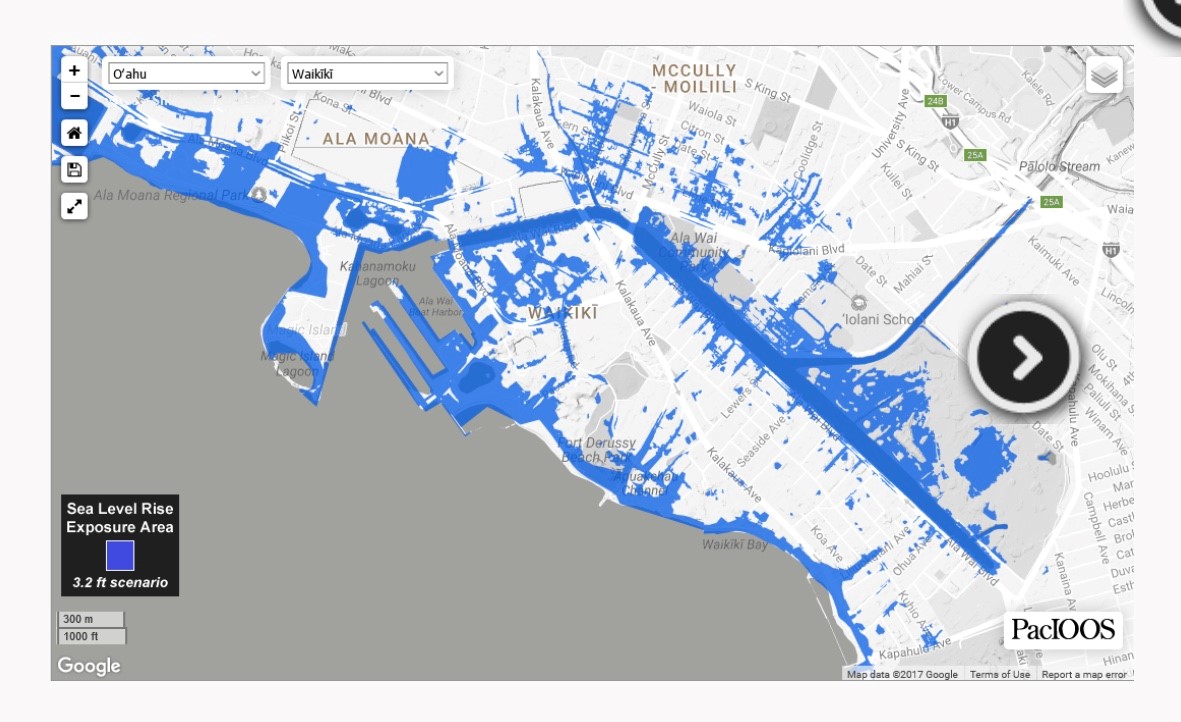
Figure 7. Flooding of Downtown Waikiki with a 3.2 ft sea-level rise. (Source: PacIOOS, 2018)
An increase in sea-level of 3.2 feet along the Waikiki shore, O’ahu, as Figure 7 shows, will result in significant flooding in downtown Waikiki. One estimate by the Hawaii Sea Level Rise Vulnerability and Adaptation Report (2017) puts the potential value of lost land and property at $19 billion. It is easy to conclude that climate change will have a huge impact on tourism as Waikiki Beach is already manmade, disappearing at the rate of twelve inches a year. Even with short term fixes such as adding more sand, the higher tides have mitigated any improvements.

Figures 8 & 9. Showing the potential flooding along the North Shore (above) and the North Shore today (below). (Sources: www.climate.hawaii.gov, 2019 and Carol Munro, 2018)
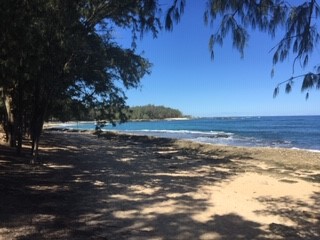
As Figure 9 suggests, the beach area along the North Shore of O’ahu is largely flat, while Figure 8 suggests the amount of flooding that could take place if sea-levels rose by 3.2 feet.
See the very interesting PacIOOS website for a Sea-level Rise Viewer showing the potential impact of sea-level rise on any of the Hawai’ian Islands.

Figure 10. The potential impact of a 1.1 foot and a 3.2-foot increase in sea-level on O’ahu. (Source: www.climate.hawaii.gov, 2019)
Recommendations by Hawai’i’s Climate Change Commission for dealing with the catastrophic flooding suggested in Figure 10 include:
- Mandatory disclosure of vulnerable properties.
- Build new development well out of the way of potential flooding.
- Develop building designs that incorporate flood resiliency.
- Costs for the project to be achieved through federal, state, private and philanthropic means.
The effects of flooding due to a potential sea-level rise are catastrophic for O’ahu and the State of Hawai’i. In addition to flood mitigation, Governor David Ige has committed Hawai’i to using 100% renewable resources to generate electricity by 2045. Hawai’i will also be carbon neutral by 2045. The hope is that this will keep the temperature rise below 3.6° F as called for in the Paris Climate Agreement (PACIOOS, 2018).
The approach of the State of Hawai’i is to as Robbins et al. suggest, use “ad hoc, local and regional efforts” (152). Their response is in some ways an institutional response, as the Hawai’i Climate Change Mitigation and Adaptation Initiative (Act 32) is now law in the state of Hawai’i and involves rules and declarations to function. However, it also involves taking in to account the local knowledge of native Hawai’ians as the Hawai’ian culture is intrinsically linked to the land. This is achieved through dialogue, outreach and engagement with native Hawai’ians. This approach would be a solution suggested by Ostrom (Robbins et. al, 56-7). The Hawai’ian response to climate is therefore an independent hybrid solution.
Hawai’i’s efforts to prepare for and mitigate climate change will take time to be proved successful or unsuccessful, but when there is little, if any, direct action from the United States Federal Government on this urgent crisis, it is more than a good place to start.
Works Cited
Robbins P, Hintz J and Moore S. (2014). Environment and Society: A Critical Introduction. 2014. Chichester, UK: John Wiley and Sons.
Hawai’i Climate Change Portal. (2017). www.climate.hawaii.gov Accessed February 28th, 2019.
Hawai’i Sea Level Rise Viewer. (2019). http://www.pacioos.hawaii.edu/shorelin/slr-hawaii Accessed February 28th, 2019.
Hawai’i Sea Level Rise Vulnerability and Adaptation Report. (2017). www.climate.hawaii.gov Accessed February 28th, 2019
Hawai’i Signs Legislation to Implement Goals of Paris Climate Accord Anyway. (2017). www.npr.org Accessed February 28th, 2019.
The Cost of Climate Change in Hawaii. (2018). www.hawaiibusiness.comAccessed February 28th, 2019
 BritTrip